Life afloat: What it’s really like to stay on a boatel
But if you’ve never stayed on a boat before, it’s natural to wonder: Will it feel cramped? What about bathrooms? Does it wobble all night?
If you’ve been eyeing up one of our beautiful boat stays but aren’t quite sure what to expect, consider this your reassuring guide. From floating cabin houseboats in peaceful rural settings to characterful riverboats moored in the heart of the city, here’s what life afloat is really like.
A different kind of escape
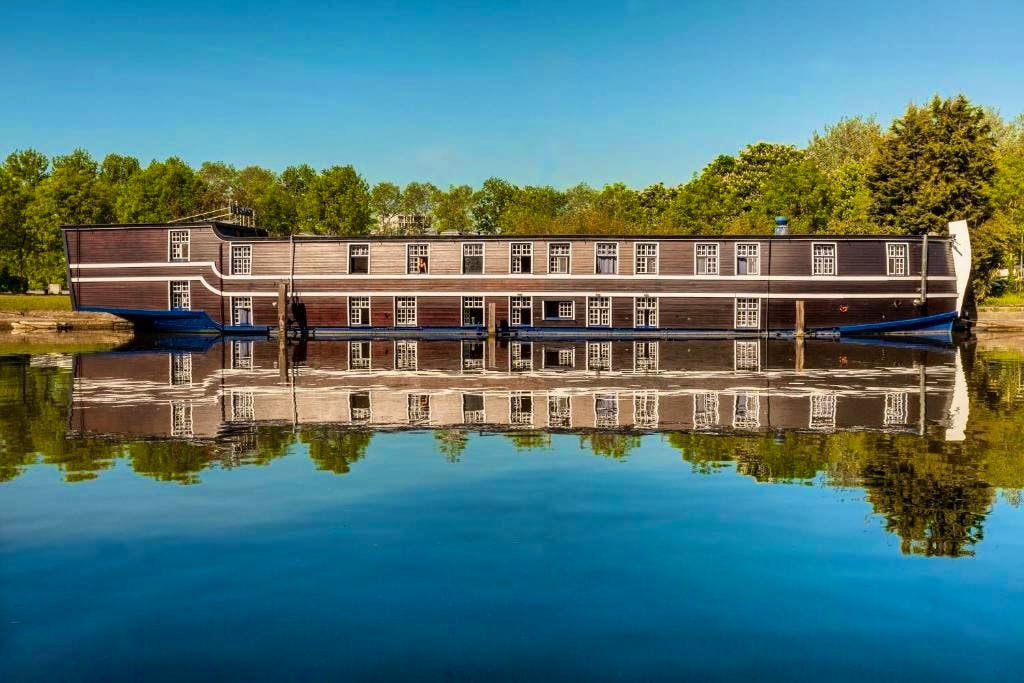
Many of our boatels are cleverly designed floating cabins or houseboats that feel remarkably like a boutique tiny home – just with better views. Think cosy sofas, wood burners, plush bedding, well-equipped kitchens and thoughtful little details that make you feel instantly at ease.
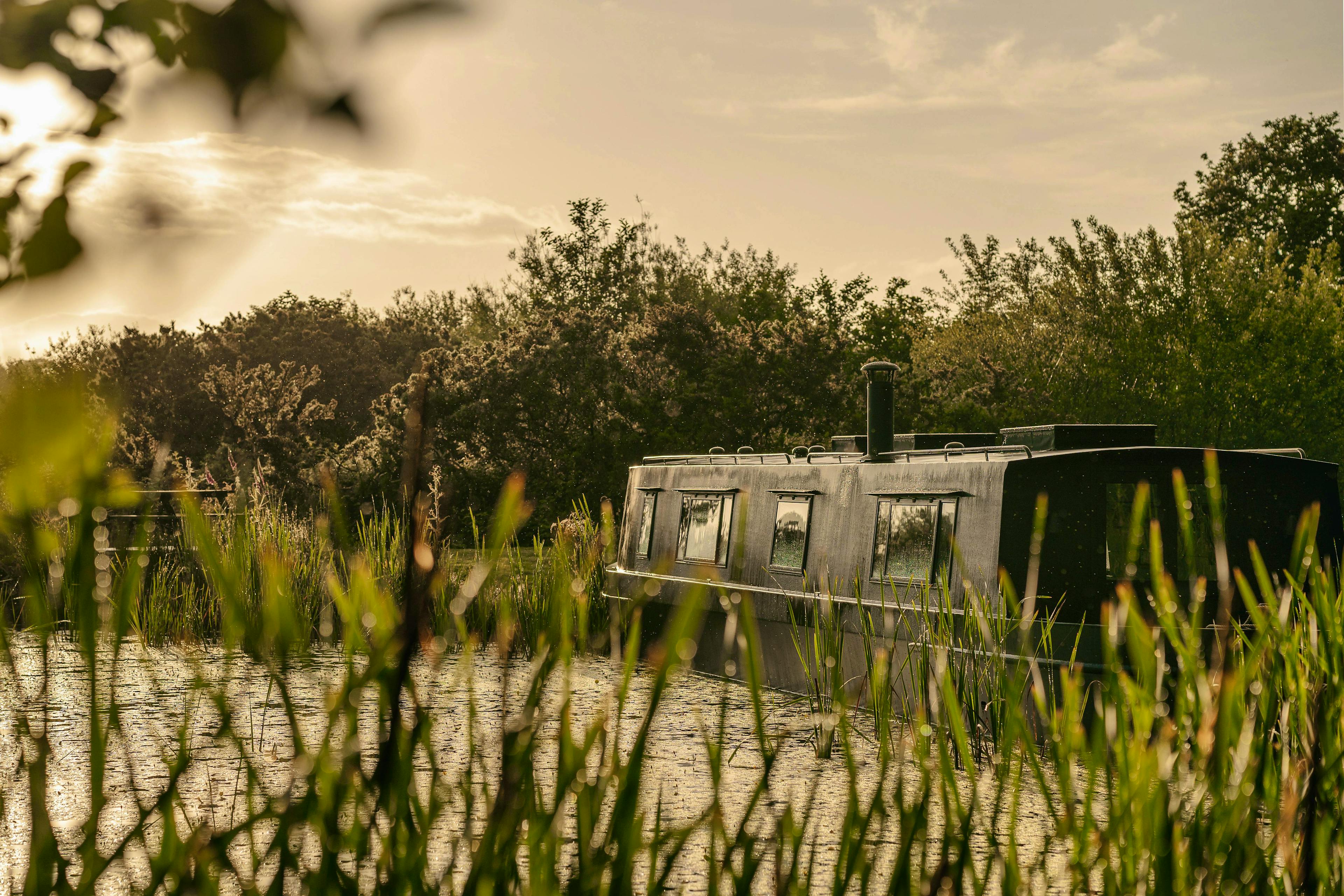
Some are tucked away on tranquil rural rivers where kingfishers flash blue across the water and the soundtrack is birdsong and the occasional ripple against the hull. Others sit in friendly marinas, offering easy access to facilities and a sociable, holiday-park-meets-harbour vibe.
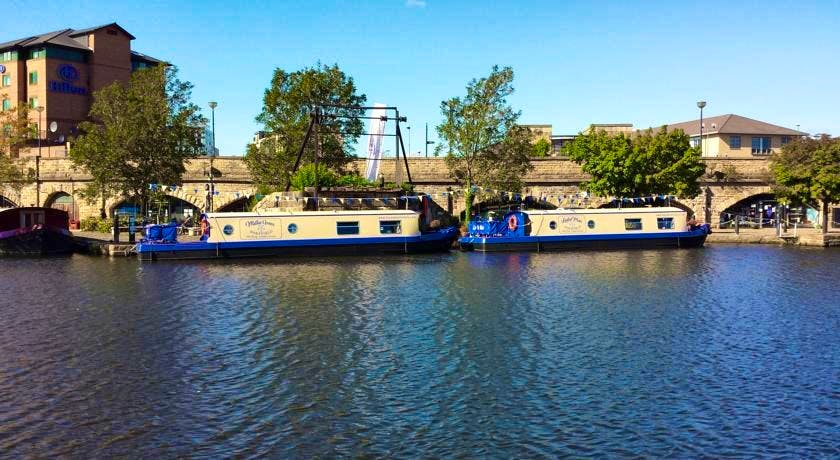
And then there are the city-centre gems. Imagine waking up on the water in London or Edinburgh, stepping off your boat and straight into a day of galleries, markets and brilliant restaurants – before retreating to your own floating hideaway once the buzz fades. It’s a wonderfully unique base for a city break.
Different settings, same magic: you’re gently removed from the everyday.
Comfort: Yes, really
You’ll usually find:
- A proper bed with real mattress (and often hotel-quality linens)
- A private bathroom with shower and flushing toilet
- A compact but well-equipped kitchen or kitchenette
- Heating (sometimes underfloor, often electric or gas, and occasionally a toasty wood burner)
- Seating areas perfect for slow mornings or board games at dusk
Floating cabin houseboats in particular are brilliantly laid out. Designers know every inch counts, so you’ll find clever storage under beds, fold-out tables, built-in benches and multi-use spaces that feel far more generous than their footprint suggests.
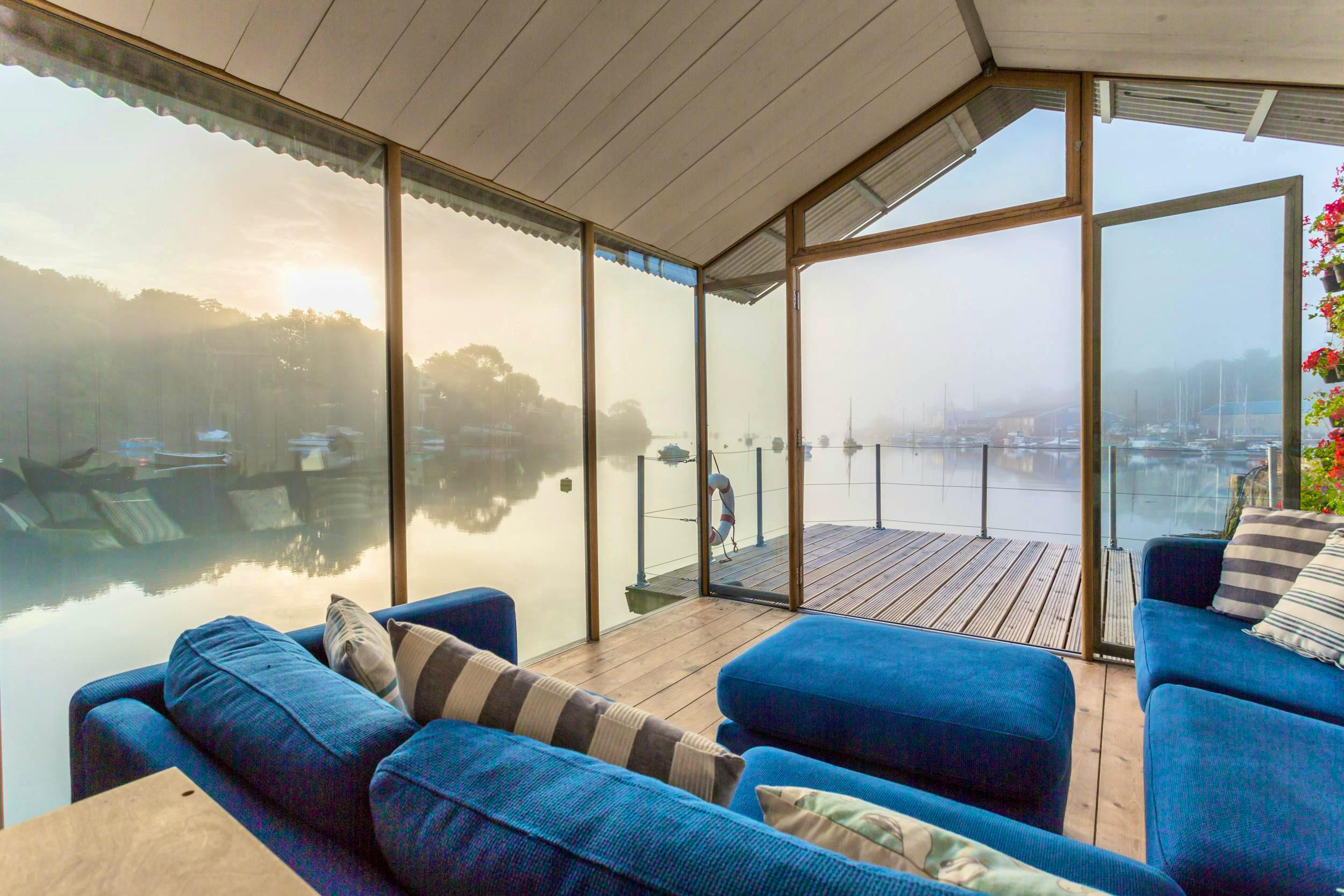
And because you’re surrounded by water, even a small space feels expansive. Large windows, glass doors and rooftop decks blur the boundary between inside and out. The view becomes part of the room.

Space & clever design
Expect spaces that are:
- Thoughtfully zoned – Sleeping, cooking and lounging areas flow into one another, but still feel distinct.
- Full of light – Skylights, portholes and wide sliding doors keep things airy.
- Connected to the outdoors – Many have decks, terraces or even little rooftop spaces where you can stretch out with a book.
In narrowboats on quaint canals, the layout is typically linear – rooms arranged one after the other – which creates a cosy, cocooning feel. Floating cabin houseboats, by contrast, often feel more like compact apartments set on pontoons.
It’s not about square footage. It’s about smart design and atmosphere.
What’s actually included?
Most boat stays include:
- Bedding and towels
- Crockery, cutlery and basic cookware
- Tea and coffee-making facilities
- Electricity and lighting
- Heating
- WiFi (in many, though not all, rural spots)
Some also include thoughtful extras – binoculars for birdwatching, board games, guidebooks for the local area, even a welcome hamper with local goodies.
Always check the individual listing for specifics, but you won’t need waders or a sailor’s hat.

Shore power, water & the practical bits
Most of our boatels are connected to shore power when moored. That means they’re plugged into the mains electricity supply at the marina or mooring point – so you can charge your phone, use the kettle and enjoy lighting and heating just as you would in a cottage.
Water systems vary slightly between boats, but generally:
- Fresh water is stored in onboard tanks and topped up regularly.
- Showers and taps work much like they do on land.
- Toilets are either connected to a pump-out system or use modern composting or cassette setups (all explained clearly by your host).
In marinas, you may also have access to additional shared facilities such as laundry rooms or extra shower blocks – handy if you’re staying a little longer.
On rural river moorings, things feel more secluded, but the essentials are still covered. The key difference is atmosphere: more birdsong, fewer neighbouring boats.
Will it rock?
In most cases, boatels are securely moored and wonderfully stable. In a marina or on a calm canal, movement is minimal – often no more than the gentle suggestion of water beneath you.
On rivers, you might feel a slight sway if another boat passes or if there’s a breeze. Many guests find this soothing – like being rocked to sleep.
If you’re particularly sensitive to motion, opting for a wide-beam houseboat or a marina-based stay may offer extra reassurance.
Marina vs rural mooring vs city centre
Marinas are friendly, practical and often wonderfully convenient. You’ll have easy parking, solid pontoons, and sometimes on-site cafés or facilities. It’s social without being noisy, and ideal for first-timers who want everything within easy reach.
These are the deeply peaceful ones. Think mist rising from the water at dawn, star-filled skies and total immersion in nature. Perfect for switching off, reading by the window and embracing a slower rhythm.
Staying afloat in the heart of a city offers a delicious contrast. Spend the day exploring museums, markets and restaurants in places like London or Edinburgh, then return to your boat for an evening drink on deck as the city lights shimmer on the water.
It’s private, atmospheric and just that little bit different from a hotel.
Mornings on the water
You might wake to the soft clink of halyards against masts in a marina, or to the quiet plop of a fish breaking the river’s surface. Slide open the doors, breathe in cool air, and watch the day unfold from your own little patch of deck.
Even in the city, being on the water creates a buffer. The bustle feels one step removed.
Who are boat stays perfect for?
- Couples after a romantic weekend with a difference
- Solo travellers craving calm and creativity
- Small families keen on a gentle adventure
- City-breakers who want character over cookie-cutter hotels
- Nature lovers who don’t want to sacrifice comfort
They’re especially lovely for those who enjoy compact living and thoughtful spaces. If you adore tiny homes, shepherd’s huts or cabins, chances are you’ll fall for a boatel too.
A few helpful tips for first-timers
- Pack soft luggage rather than a large hard-shell suitcase (storage is clever but compact).
- Read your host’s welcome guide in advance – it will explain any boat-specific quirks.
- Embrace the pace. Life on the water invites you to slow down.
- Most importantly, arrive curious rather than cautious.
Why it works
Because they combine the comfort of a well-designed tiny home with the ever-changing beauty of water. Because they offer novelty without discomfort. Because they feel like an adventure – but an easy one.
You’re cradled by nature, even in a city. You’re gently removed from routine. And at the end of the day, you close the hatch (or the sliding glass doors), turn on the lamps, and feel entirely, cosily at home.
For first-time guests, the nerves tend to melt away within minutes of stepping aboard. The space feels welcoming. The bed looks inviting. The kettle boils.
And then you notice it: the soft shimmer of light on the ceiling, reflected from the water outside.
That’s when you realise.
Life afloat isn’t about sacrificing comfort. It’s about gaining atmosphere. It’s about waking somewhere memorable. It’s about choosing a stay that floats just a little outside the ordinary.
And once you’ve tried it, you may well find yourself hooked.
Yes – far more than most people expect. Many boatels are beautifully designed floating cabins or houseboats with proper beds, heating, private bathrooms and well-equipped kitchens. Think boutique tiny home on the water, rather than basic boating break.
In most marina and canal locations, movement is minimal. Boats are securely moored and feel very stable. On rivers, you may notice a gentle sway if another boat passes, but most guests find it soothing rather than disruptive.
The majority do. Most include a private shower, flushing toilet and sink. Systems vary slightly from boat to boat, but everything works much like it would in a small apartment or cottage.
Shore power means the boat is plugged into the mains electricity supply while moored. That allows you to use lighting, heating, plug sockets and kitchen appliances just as you would in a land-based stay.
Absolutely. Many of our boat stays are permanently moored floating cabins or houseboats, so you don’t need any boating experience. Hosts provide clear instructions, and everything is set up for an easy, relaxing break.
Marina stays tend to offer easy access, parking and sometimes shared facilities. Rural river moorings feel more secluded and nature-focused, with birdsong and open views. Both offer comfort – it’s simply a question of atmosphere.
Yes. We have boatels in city destinations including London and Edinburgh. They offer a unique base for a city break – close to the action by day, calm and atmospheric by night.
Pack as you would for any self-catering break. Bedding, towels and kitchen essentials are usually provided. Soft luggage is often easier to store than large hard-shell suitcases.
Many boat stays offer Wi-Fi, particularly those in marinas or city locations. Some rural escapes may have more limited connectivity – perfect if you’re planning a digital detox. Always check the individual listing for details.
Boatels are perfect for couples seeking a romantic weekend, solo travellers craving calm, small families wanting a gentle adventure, or city-breakers looking for something more characterful than a hotel. If you love clever design and cosy spaces, you’ll likely love life afloat.